What Is Vibe Coding? Meaning, Tools, Risks, and When You Need a Developer
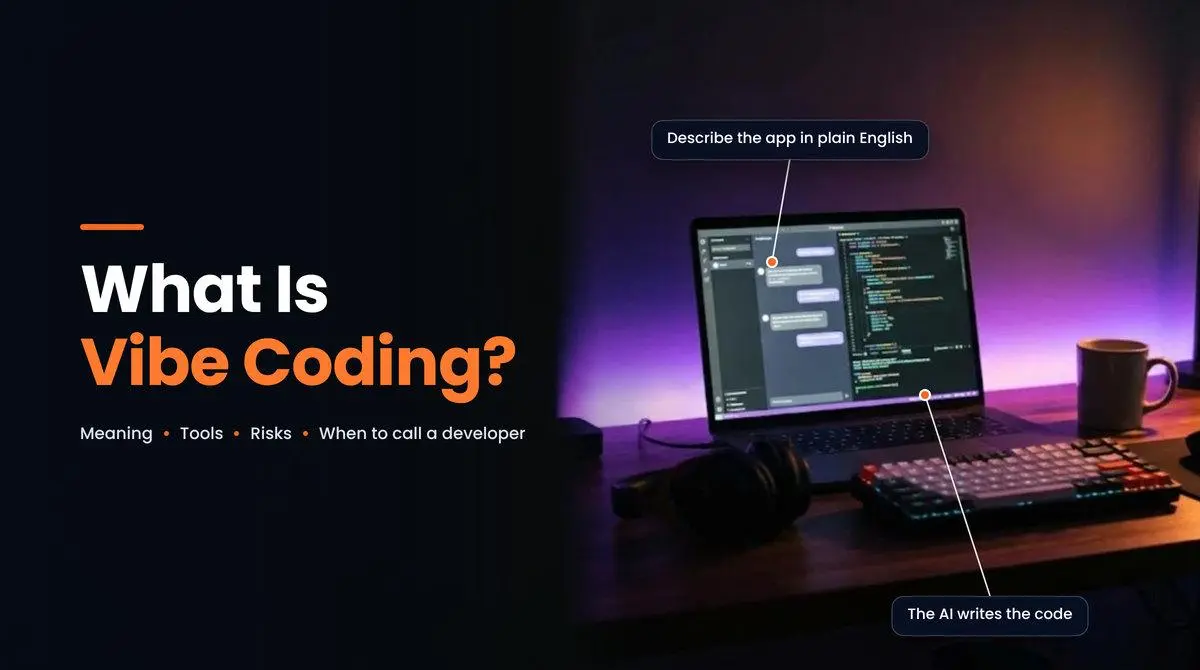
Table of Contents
- What Is Vibe Coding? Meaning, Tools, Risks, and When You Need a Developer
- What Is Vibe Coding?
- How Vibe Coding Works
- Vibe Coding vs. AI-Assisted Engineering
- What Vibe Coding Is Good For
- The Risks of Vibe Coding
- Signs a Vibe-Coded App Has Outgrown Its Origins
- How to Use Vibe Coding Safely
- From Prototype to Product
- Will Vibe Coding Replace Developers?
- Turn Your Prototype Into a Product
- Frequently Asked Questions
In February 2025, AI researcher Andrej Karpathy described a new way of building software: tell an AI what you want, accept what it writes, and keep going without reading the code. He called it vibe coding. Nine months later, Collins Dictionary named it the Word of the Year for 2025.
The idea has moved from a joke among engineers to a real way people build apps. This guide explains the vibe coding meaning, how it works, what it is good for, where the risks are, and when a professional developer needs to take over.
What Is Vibe Coding?
Vibe coding is building software by describing what you want in plain language and letting an AI model write the code. The person steers by results: they run the app, say what is wrong or missing, and ask the AI to fix it. Collins defines it as the use of artificial intelligence prompted by natural language to assist with the writing of computer code.
What separates vibe coding from ordinary AI-assisted programming is how little attention goes to the code itself. In its purest form, the builder never reads it. That is what makes the approach fast, and it is also the source of every risk described below.
How Vibe Coding Works
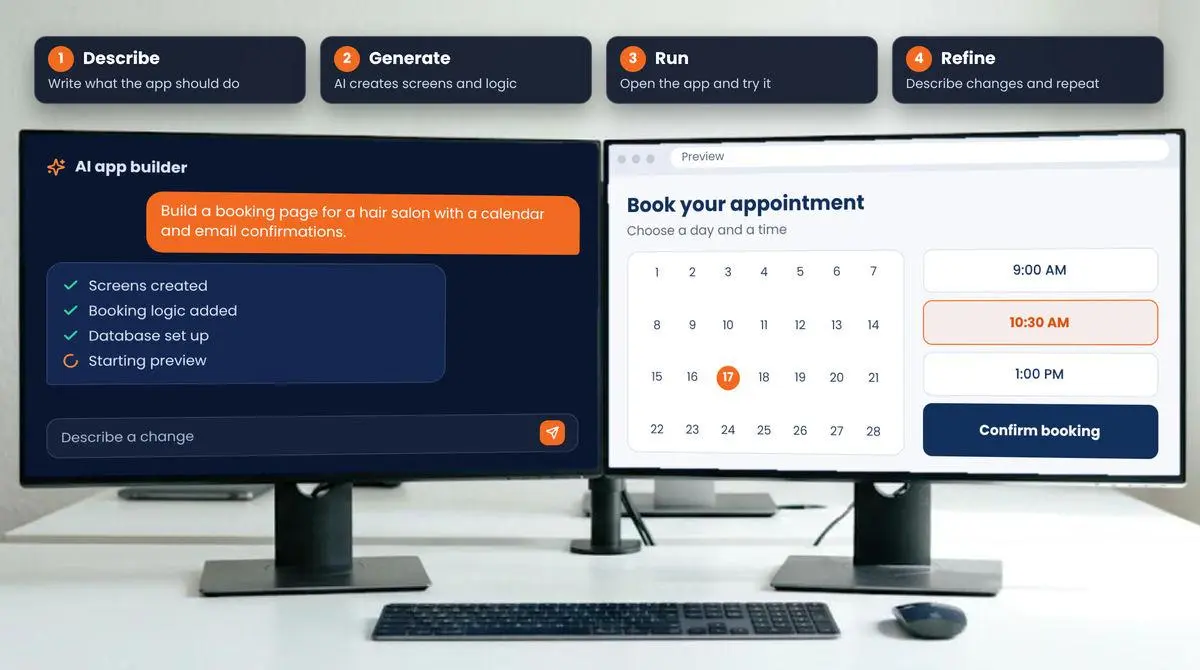
- Describe. Write what the app should do: “a booking page for a hair salon with a calendar and email confirmations.”
- Generate. The AI creates the screens, logic, and database setup.
- Run. Open the app and try it.
- Refine. Describe the changes or paste the error message, and the AI rewrites the code.
- Repeat and publish. Continue until it looks right, then deploy with a click.
Two kinds of tools support this. App builders such as Lovable, Replit, and Bolt turn a prompt into a hosted application. AI coding assistants such as Cursor, GitHub Copilot, and Claude Code work inside a code project and can make changes across many files.
Vibe Coding vs. AI-Assisted Engineering
Professional teams use the same AI models, but in a different way.
| Aspect | Vibe coding | AI-assisted engineering |
|---|---|---|
| Who drives | Anyone who can describe an outcome | A developer who owns the design |
| Code review | Little or none | Every change is read and reviewed |
| Testing | Click around and see | Automated tests on every change |
| Best for | Prototypes, demos and personal tools | Software that customers depend on |
Most developers stay on the right side of that table. In the 2025 Stack Overflow Developer Survey, 84% said they use or plan to use AI tools, yet 72% said they do not vibe code as part of their professional work. Our articles on ChatGPT-assisted coding and AI-powered development tools cover the engineering approach.
What Vibe Coding Is Good For
- Prototypes. Turn an idea into something clickable in an afternoon and show it to customers or investors.
- Internal tools. Simple dashboards, calculators, and forms used by a small team.
- Landing pages and simple sites. Marketing pages with little logic behind them.
- Personal automation. Scripts that rename files, clean spreadsheets, or pull a report.
- Requirements. A working mock-up is a clearer brief for a development team than a document.
In each case, the cost of a mistake is low and nobody outside the team depends on the result.
The Risks of Vibe Coding
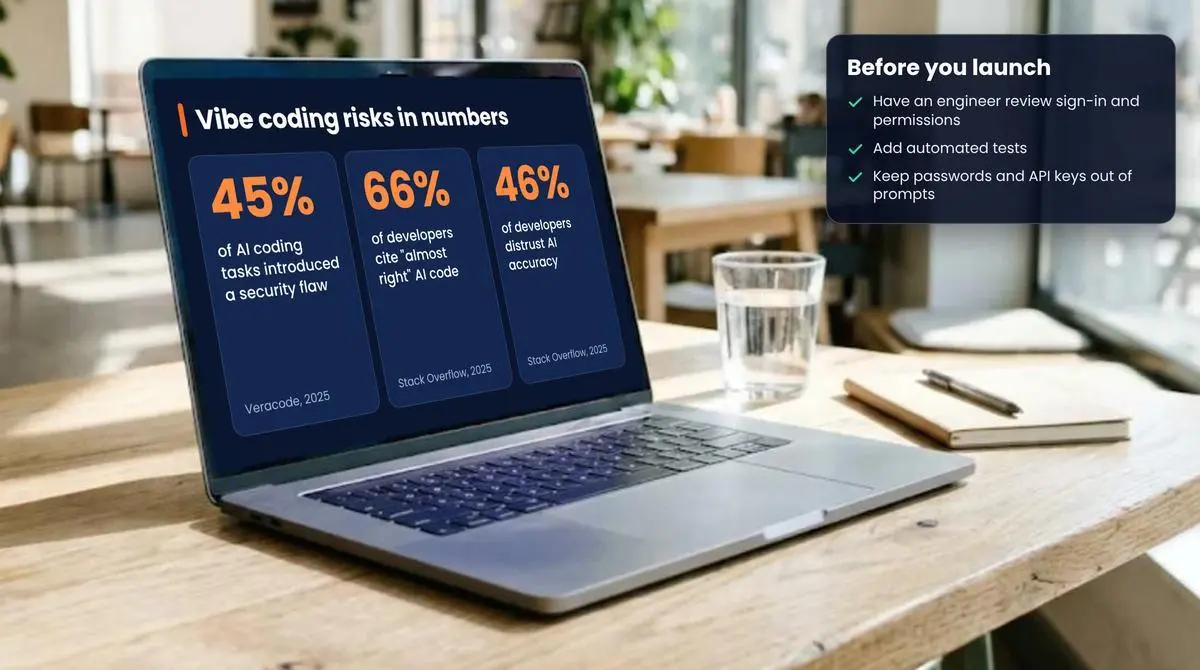
- Security. Veracode tested more than 100 AI models on 80 coding tasks and found that AI-generated code introduced security vulnerabilities in 45% of cases. Typical gaps are missing access checks, exposed keys, and unvalidated input.
- Almost-right code. In the Stack Overflow survey, 66% of developers named AI solutions that are almost right, but not quite, as their biggest frustration, and 46% said they distrust the accuracy of AI output.
- Maintainability. When nobody has read the code, nobody can explain it. Each fix is another prompt, and changes start to break earlier features.
- Scale. An app that works for ten test users can fail under real traffic because of slow queries or missing limits.
- Data and compliance. Customer records, payments, and health data bring legal duties that a generated app does not meet by default.
None of this makes the tools bad. It means the output is a draft, and a draft should not hold customer data.
Built an app with AI and unsure it is safe?
Plego’s engineers review the code, sign-in, permissions, and data handling.
Signs a Vibe-Coded App Has Outgrown Its Origins
- Real customers log in, pay, or upload personal information.
- The business would lose revenue if the app went down.
- Every new feature breaks an old one.
- Nobody can say how sign-in, permissions, or backups work.
- Hosting bills or response times keep climbing.
Any one of these means the app is now a product and needs engineering.
How to Use Vibe Coding Safely
- Keep the stakes low. Use it for prototypes and internal tools.
- Protect secrets. Never paste passwords, API keys, or customer data into a prompt.
- Use version control. Save every working state so you can go back.
- Add tests. Automated testing catches the features that quietly break.
- Review before launch. Have an engineer check sign-in, permissions, and data handling. Our tips for securing a web application list the basics.
- Plan the handover. Decide early what will be rebuilt properly if the idea works.
From Prototype to Product
A vibe-coded prototype is valuable even when it cannot go to production. It shows what users want, and it gives developers a precise picture of the screens and flows. From there, an engineering team designs the data model, rebuilds the risky parts, adds authentication, tests, monitoring, and a release process, and brings in data security and compliance controls where regulated data is involved.
This is close to the path many low-code and no-code projects follow: start fast, prove the idea, then invest in a foundation that will last.
Ready to turn a prototype into a product?
Our startup and MVP development team keeps what works and rebuilds the rest.
Will Vibe Coding Replace Developers?
It changes what developers spend time on. Less effort goes into typing code and more into deciding what to build, reviewing what the AI produced, testing it, and keeping systems secure. Those are the parts that determine whether software can be trusted, and they still need people who understand how it works.
Turn Your Prototype Into a Product
If you have vibe coded something people want to use, Plego can take it the rest of the way. Our startup and MVP development and web application development teams review the prototype, keep what works, and rebuild what must be secure and scalable. We also build generative AI features into existing products. Contact us for a code and architecture review.
Frequently Asked Questions
What does vibe coding mean?
Vibe coding means building software by describing what you want to an AI in plain language and accepting the code it writes, usually without reviewing it line by line. You guide the result by testing the app and asking for changes.
Who coined the term vibe coding?
AI researcher Andrej Karpathy introduced the term in February 2025. Collins Dictionary named it the Word of the Year for 2025.
Is vibe coding safe?
It is safe for prototypes and low-risk internal tools. For apps that handle customer data or payments, the code needs professional review, because AI-generated code often contains security flaws.
Can you build a real business app with vibe coding?
You can build a working first version. To run it as a business, it usually needs engineering work on security, testing, performance, and maintainability before real customers rely on it.
What is the difference between vibe coding and low-code?
Low-code platforms build apps from visual components with set rules. Vibe coding generates custom code from prompts. Low-code is more predictable, and vibe coding is more flexible but harder to control.
Which tools are used for vibe coding?
Popular tools include app builders such as Lovable, Replit, and Bolt, and AI coding assistants such as Cursor, GitHub Copilot, and Claude Code.
Will vibe coding replace programmers?
No. It speeds up writing code, but design, review, testing, and security still need people who understand the system. Developer work is shifting toward those tasks.
Turn your prototype into a product
Send us what you have built and get a code and architecture review.